Pre-Employment
Personality test
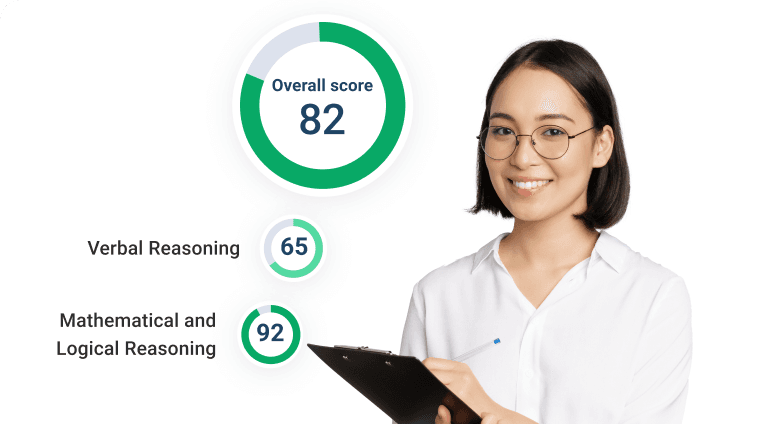
Screen all applicants for personality fit, get access to an expanded talent pool, and increase hiring accuracy.The TalentMesh pre-employment personality test tailors its content and scoring to fit your specific role. It provides easy-to-interpret results, and can be easily administered to all applicants securing bias-free screening.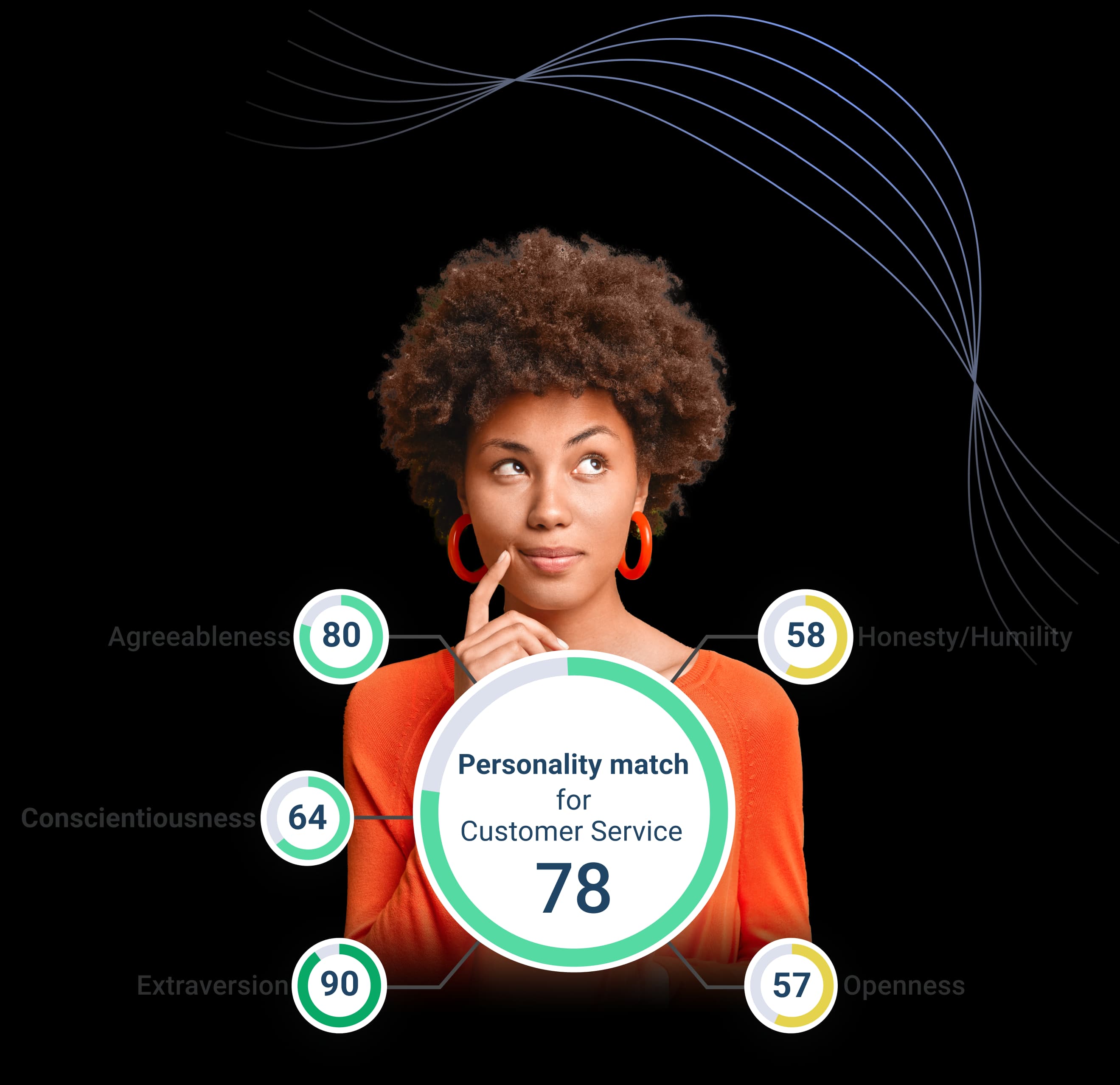



What is a personality test?
A personality test is a scientific tool used to identify a person’s personality traits, and provide insights into the person’s expected behaviour. The tests can be used across all industries and job levels. Personality tests has historically been more extensively used for executive hires, but with the increased awareness about the importance of hiring the right candidate for the job, today personality tests are being utilized for all job levels.What personality tests are used for hiring?
A personality test for hiring is a test that is designed to measure personality traits that are crucial to succeed in the workplace. Examples of tests that are used for hiring includes Hogan, HEXACO and the Big Five personality test.There are many different kinds of personality tests on the market, but not all tests should be used for hiring. It is important the test is proven to predict workplace performance, and that the content is relevant for the specific job.Extensive studies have shown that the Big Five Personality Test is one of the most reliable to prediction job performance, and outperforms candidate selection solely based on resumes and job interviews.The TalentMesh pre-employment personality test
A game-changer for recruitment
Job specific testing
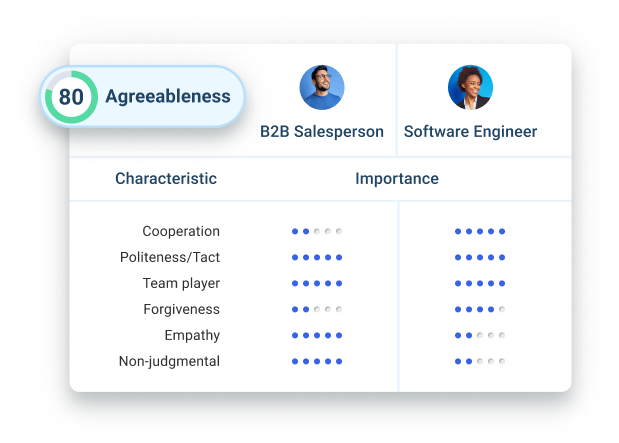
The TalentMesh personality test is built on an improved version of the Big 5 personality test framework. We have researched which personality characteristics are the most important to succeed across various job groups. For each job group, we include only the most important characteristics. This makes our personality test unique for each job group, and ensures it includes only job-relevant content.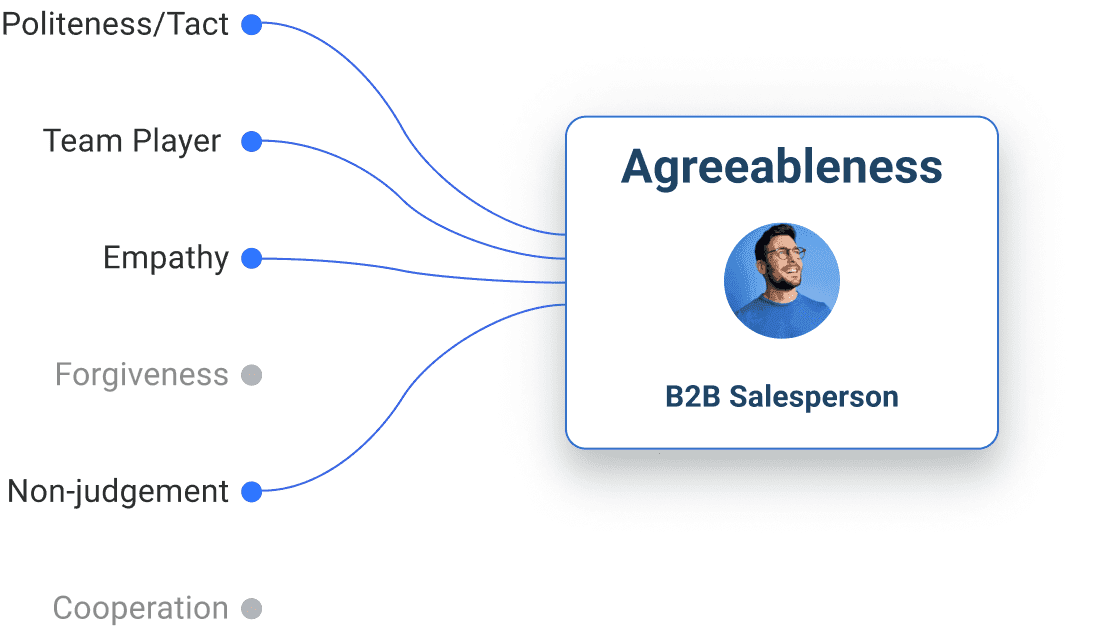
Accurate and easy score analysis
The overall personality score takes into account the relative importance of the personality characteristics for the specific job. Further, the score is automatically compared to the score of other applicants in the TalentMesh database, that have applied for a similar job. This makes the scoring uniquely accurate and easy-to-interpret.Actionable results & insights
Applicants will be ranked based on the personality fit for easy decision making. Further, the overall score is broken down into around 50 job-relevant characteristics and associated behaviours. This allows very detailed pre-interview insights into expected applicant behaviour. Further, TalentMesh will generate interview questions that are customized based on the specific applicant results.
The result? A personality match with scientific precision
Different jobs require different personalities to succeed. This is why it is hard to find a perfect personality fit using a generic personality test. The TalentMesh personality test is built to automatically account for what characteristics that matter, based on your unique hiring situation. Further, score analysis and applicant comparison is made accurate and intuitive, so you can hire with scientific precision on every recruitment.
Our personality test has achieved best-in-class reliability
Research
Industry experts analyse and rank the importance of more than 100 characteristics and more than 500 associated behaviours for each job group.
Selection
Personality questions are created to cover these characteristics, and sent to 200 participants to identify the psychometric properties. Only questions with best properties are selected.
Composition
Our psychometrician then composes a test from the selected questions to optimize test reliability. The TalentMesh test achieved a best-in-class reliability score.Administering it is as easy as one, two & three.
1
2
3
Are you ready to hire top performers, every single time?
Sign up for our free trial today – no credit card required!FAQ
Personality tests can increase the likelihood of making good hiring decisions compared to hiring solely based on past experience and job interviews. Firstly, there is extensive research that has shown a correlation between job performance and certain personality factors and characteristics. For example, a high conscientiousness is positively linked to job performance across a number of job types. Secondly, a strong insight into an applicant’s personality, helps with facilitate professional interviews and onboarding. Lastly, they provide objective data that can be used to evaluate and compare applicants in a fair and consistent manner. This helps reduce unconscious biases that can occur during the hiring process.
When it comes to making employment decisions, personality tests can be a useful tool as they help improve hiring accuracy, job interviews and onboarding. However, we recommend that you only use personality tests that are validated by a psychologist and focused on hiring. In additional to this, we recommend to combine personality tests with aptitude, skills, and emotional intelligence tests for a more holistic candidate evaluation, and improved hiring accuracy.
Personality tests can essentially be used for all job types. However, a more accurate result should be expected if the personality test is customized for the specific role. We recommend administering a personality test as part of the screening process for all applicants as it increases the hiring accuracy and provides valuable insights into an applicant’s suitability for a particular role ahead of the job interview. Further, it also moves subjective biases from the hiring process.
The use of personality tests is becoming increasingly popular, with a growing list of organizations from Fortune 500 companies to small and medium-sized companies, that want to professionalize their recruitment. It is estimated that around 75% of organizations with more than 100 employees use pre-employment tests such as personality and aptitude tests for hiring. Further, it is estimated that around 80% of fortune 500 companies use personality test for employee development and coaching.
Personality tests should be built in a way that they are not discriminatory, and it can be documented as part of the creation process by a phycologist. However, if a personality test is built without the involvement of a phycologist, and/or there is no documentation on the properties of the test, then it can run the risk of being discriminatory and may not be applicable for hiring.
The Big 5 personality test is a framework for understanding and measuring an individual's personality. The test focuses on measuring five factors of an individual’s personality: openness, conscientiousness, extraversion, agreeableness and neuroticism/emotional stability. This is why the test is also referred to as OCEAN or the Five Factor Model. There are many providers of Big 5 personality tests. The professional providers will be able to decompose the 5 five factors into associated characteristics, and further decompose these into expected behaviours. Further, it is important that the providers have data on which behaviours are desirable for different jobs.
The Big 5 test works by gathering data using a questionnaire that assesses the extent to which an individual agrees or disagrees with personality statements relating to the five personality factors. The professional providers will include a score for the characteristics that exist within each factor and a detailed descriptions of the expected behaviour. In addition this, the test should have been validated by a physiologist, and have achieved a strong reliability score. In a hiring context, it is also important that the test content is relevant to the specific job, and that it also measures potential impression management by the applicant.